1st Place is Beautiful

The Berurim and Sderot plant won the “Beautiful Industry” competition for 2023 in Israel

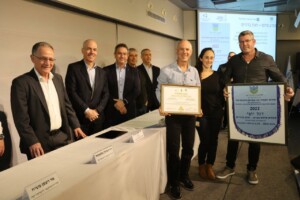
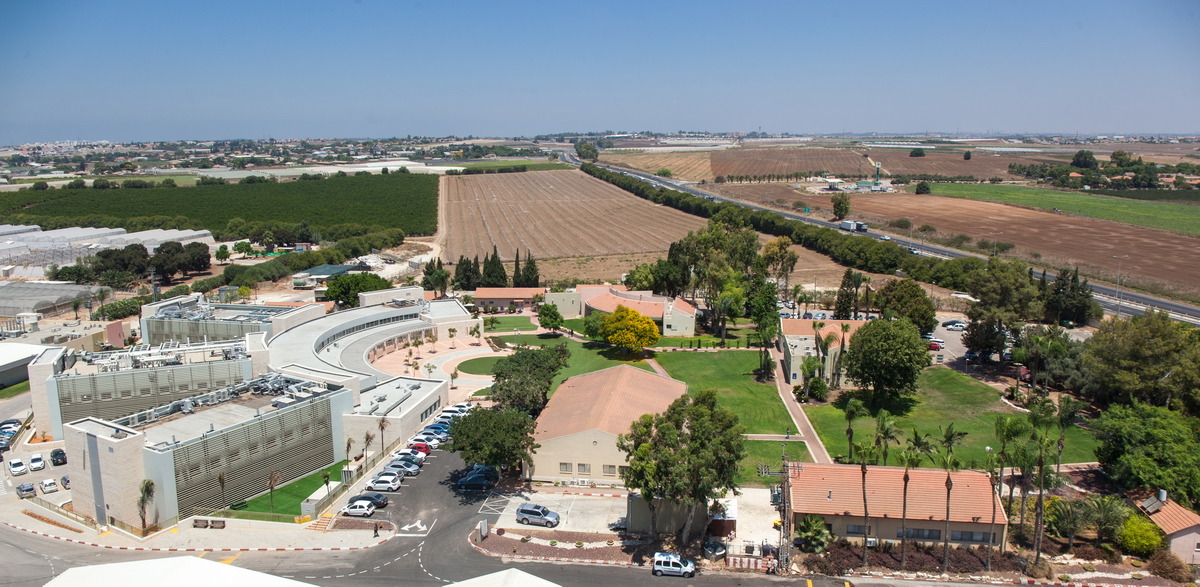
On Thursday, February 16, 2023, a ceremony was held at the “Council House for Beautiful Israel”. The ceremony which was held for the 42nd year, summed up the competition for a beautiful and sustainable industry in Israel, in which star signs and certificates were awarded in the areas of quality of life and the environment to outstanding enterprises and companies.

The purpose of the competition is to improve the working environment for workers in the Israeli industry and the outlook of factories on the environment and sustainability in the areas where they operate. In addition, the enterprises are also ranked according to the community activity they carry out. About 140 factories and industrial parks from all over the country participated in the competition, working throughout the year to meet the criteria.

We are proud to inform you that both the Berurim site and the plant in Sderot have been recognized in the 5-star competition.

 The Berurim site has also won the competition of the Beauty Flag.

In this competition we’re being recognized with 3 important topics:

  • Energy and resources saving
  • Environmental awareness and recycling
  • Contribution to the community

Odelia Shalev, Director of Corporate Responsibility (CSR) says:
“Winning the “Beauty Flag” is a result of the importance we are addressing to the environment topic and more specifically to sustainability. At Hazera, sustainability is considered an integral part of our Corporate Responsibility, and under this framework we initiate and execute projects that will help us minimize our carbon footprint and our energy resources usage.”

Itzik Viloga, the administration manager of the Berurim site adds that “This year Berurim site contested and won the “Beauty flag competition in addition to the 5-star competition against leading and worthy competitors in the industry.
We at “Hazera” work on both sites regarding our impact on the environment and contribute to the community on a daily basis as a concept. Additionally, our breeding routines also take into account the tasks and operational goals which include:
Circulation and safety, energy efficiency, internal and external visibility and employee well-being.”

Oren Egozi, Plant Manager in Sderot:
“Beyond the important environmental and social aspects, this national recognition is also acknowledging our work for continuous improvement of the working terms and safety in the workplace for the benefit of all our employees and contractors as well as our investment in our workplace visibility and its surrounding – inside and outside.”

We’re happy to share these news with you, and we’re proud of the emphasis we place on sustainability, recycling, and contribution to the community. As part of the agricultural industry, we believe that our activities for the environment are a strategic and important part of our work, they affects us directly in our day to day work, and we’ll continue to act for the environment and the community in which we live.


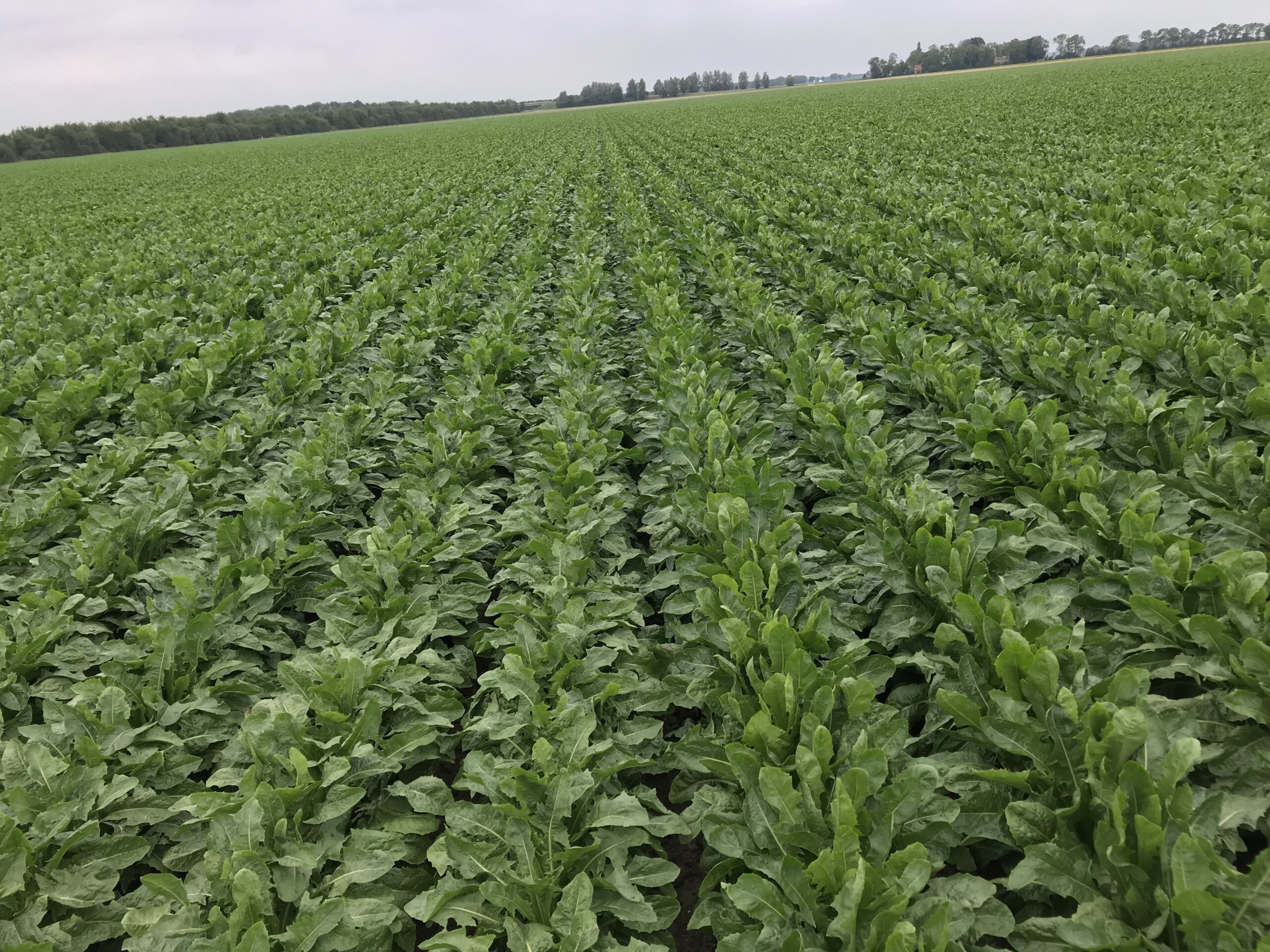
Come and see, our Chicory!

February 14. Yesterday was Valentine’s Day. The day you put your loved one in the spotlight. In this article we tell you a bit more about our much-loved chicory! What are the developments of chicory in Hazera? And what makes growing this vegetable so much fun? We give you the answers.

What exactly is chicory?

First, some background information. Chicory is originally a Belgian product. It is a relative of endive and is widely used in European cuisines, especially in Belgium, France and the Netherlands. It grows in dark, shady environments and has a mild, bitter taste. Chicory is often cooked and used in salads, soups and stews. It is rich in nutrients, such as vitamins, minerals and antioxidants, and is often considered a healthy and nutritious vegetable

In conversation with a Hazera Hero!

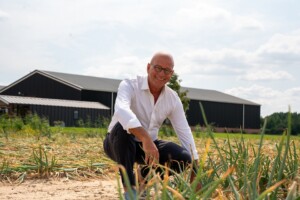
Twelve years ago, Denis Desrumaux started working for Hazera. He has a background as a chicory grower and is now Crop Specialist Chicory. “When I started at Hazera, we had about 3% market share. Our first successes were mainly Platine and Zilia. By now we have been working for 10 years with our main varieties Topscore (semi-early variety) and Flexine (late variety). We now have an 85% market share in the Benelux. At this moment Maroline, Ecrine and Beguine are our early varieties, Topscore and Daufine and Laurine our middle varieties, Flexine and Djine our late varieties. With this fine portfolio of varieties, chicory growers can supply the market year round with the beautiful golden yellow tasty heads.

Explaining the process, with love!

Explaining the process is no problem for Denis: “Chicory is a biennial product. The first year, in May, the seeds are placed in the field and a taproot develops there. After 130 to 170 growing days in September, October, November and December, those taproots go out of the field and enter large coolers. Here they are frozen to -1.5 degrees and the following year they take out those taproots little by little. Then they are put onto trays or in the ground. Chicory from the ground is ground chicory and chicory from the trays with water is called Hydro chicory. The second year we take them out and have varieties for early, mid, and late season. This allows them to grow chicory year-round with taproots.

Witlof met Denis

What makes being a chicory grower so much fun?

Denis: “The best thing about growing chicory is that it is a very specific crop that is technically very difficult. Not everyone can just dive into it. You have to work at least 3-4 years before you know how it works. That’s the fun part. We take our growers by the hand to get the best results. It’s a two-year crop, so renewal doesn’t come very quickly. You need two years to see if your product is adequate. This you want to see several years in a row. Especially if you come up with a and new product. Then you need at least 6-7 years before you can actually really break through. With other crops, it goes much faster.

And … what makes being a chicory grower for Hazera so much fun?

Denis: “Working with Hazera for farmers. We have a very strong, warm relationship with them. I like that. It’s always nice to work with people who know the market and of course also think about the long term.”

Want to know more about chicory? Then get in touch!

Hazera center-stage at MOP Arava Israel 2023 annual expo

Want to be the first to see the next generation of the Israeli tomato and be impressed by the new variety portfolio of Hazera? Join us for a unique opportunity and meet our team for a deeper understanding of the quality, performance and potential of Hazera’s new varieties.

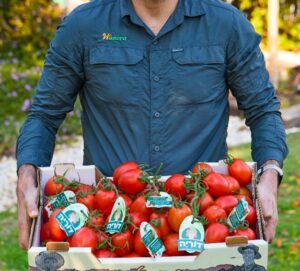
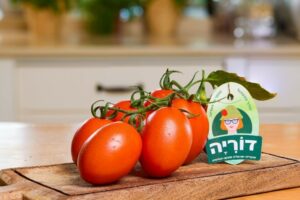
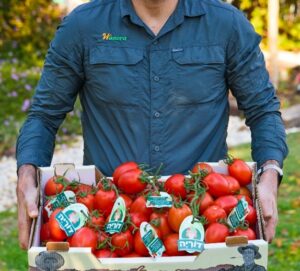
The exhibition in the Arava is the perfect opportunity to get a glimpse of the future of the Israeli tomato with “Rubicon”/ “Doria” – a new Saladette tomato variety that is suitable for picking in a cluster. The tomato is delicious, firm, has a long shelf life and excellent preservation on the plant, as well as a bright red and attractive fruit.

Rubicon (“Doria”): from the grower to our plate. Photograph: Ofer Hajub

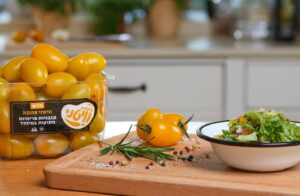
In addition to “Rubicon”, Hazera- a world pioneer in the seed industry, will launch the “Yellow Whitney” – the heart tomato that made Israelis fall in love and is now available in red and yellow. The Yellow Whitney is the first yellow Midi Plum tomato of its kind – it is extremely tasty, has impressive yellow fruit, is very firm and crunchy and has a strong plant and a high yield.


Yellow Whitney. Photograph: Ofer Hajub

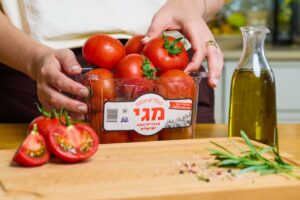
Come see and taste! Still young at heart, the queen of flavor, The “Maggie” tomato, is ringing in its first decade with a party! Maggie is known as a high-quality Israeli tomato, with a juicy green gel, which gives it a fine taste and rich aroma. Maggie is grown throughout the year nationwide in Israel among selected farmers only and packaged in a closed and marked package – and now with a new branding in honor of its 10-year celebration.


Maggie “the Taste” Tomato. Photograph: Ofer Hajub

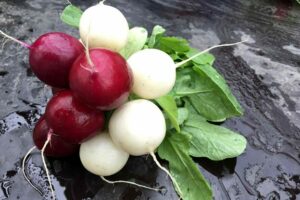
At the exhibition, Hazera will launch new varieties of radishes: “Whitella” in white and “Purpella” in purple: round radishes for growing in open and closed areas, with impressive and strong colors, suitable for growing all year round with a high yield and excellent internal quality.


New radish varieties. Photograph: Hazera

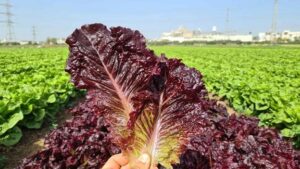
Come and get an impression of a red, curly romaine lettuce: “Purple Heart“. Beyond the nutritional benefits of romaine lettuce, which is 5 times richer in vitamins than other types of lettuce, the variety “Purple Heart” is characterized as crunchy and extremely tasty and has a bright red color that penetrates deep into the leaf.


“Purple Heart”. Photograph: Hazera

Come and meet the team of Hazera at the Araba expo taking place on February 15 and 16 in Ein Hatzeva, Israel and join “Rubicon” /”Doria” on her fresh produce journey from the field, to the retailers, and straight to her kitchen!